1. What Video Surveillance Trends Mean for Today’s Businesses

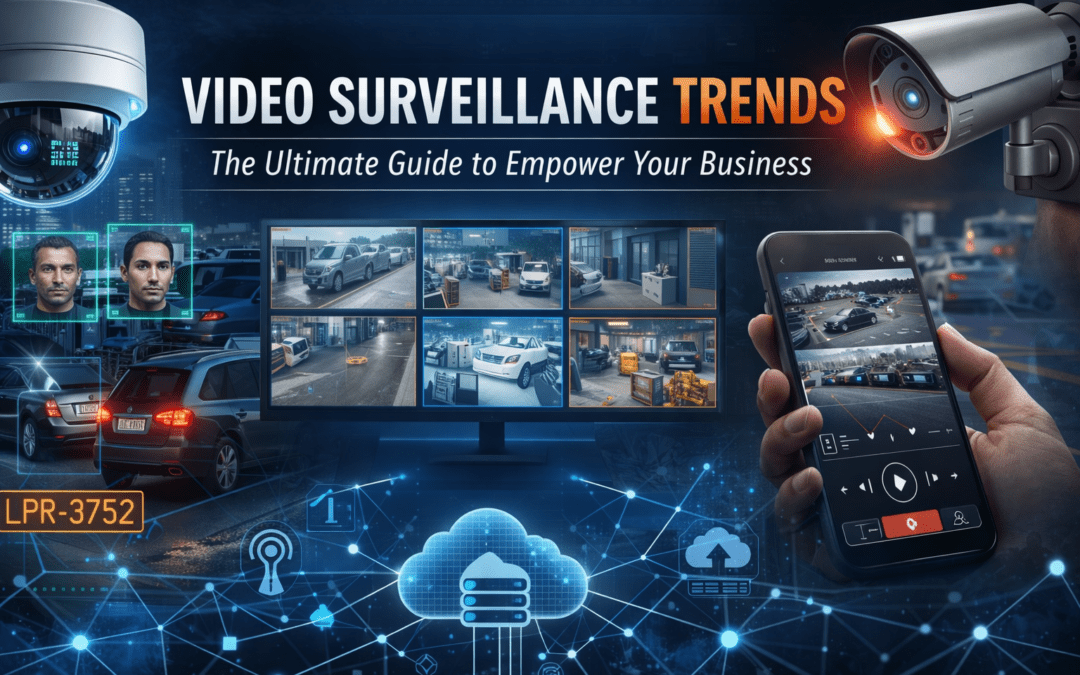
Video Surveillance Trends are transforming how organizations protect people, assets, operations, and facilities. For business owners, executives, and project managers who manage risk daily, today’s technology offers far more than simply recording footage. It delivers realtime awareness, proactive deterrence, AIpowered insights, and centralized control from virtually anywhere.

Facilities across industrial, logistics, transportation, healthcare, banking, education, places of worship, and multidwelling environments now rely on these advancements to strengthen security while increasing operational efficiency. As Video Surveillance Trends continue to evolve, the gap widens between businesses that adopt modern systems and those still relying on outdated, standalone cameras.

As you evaluate new solutions, it is important to understand which modern tools and Video Surveillance Trends offer the greatest benefitand how a professional integrator like Atlanta Access Controls (AAC) ensures each system is designed, installed, and maintained to code, to spec, and to your expectations.

Why Businesses Upgrade Surveillance Systems

  • Stronger protection for people and property
  • Better visibility into daily operations
  • Easier reporting and incident investigation
  • Modern systems that grow with your business

2. Why Modern Facilities Rely on Advanced Video Surveillance

Businesses deploy modern video surveillance for several key reasons: preventing theft and vandalism, strengthening safety and compliance, reducing insurance claims, and resolving disputes using accurate video evidence. In many sectors, Video Surveillance Trends also support operational improvements, such as monitoring delivery activity or validating that critical processes are followed correctly.

Today’s systems have shifted from simple cameras to intelligent platforms capable of detection, deterrence, analytics, and automation. For organizations with multiple locations across Metro Atlanta, North Georgia, and Central Georgia, this means centralized management of cameras, users, and alerts from a single pane of glass.

Key Benefits of Modern Video Surveillance

  • Higherresolution images for better identification
  • Integration with access control and alarm systems
  • Reduced onsite guard costs through smarter monitoring
  • Flexible storage options, including cloud and hybrid

3. Five Key Video Surveillance Trends Shaping the Future

The most impactful Video Surveillance Trends can be grouped into five categories: AI and analytics, automated license plate recognition (ALPR/LPR), IP cameras, active deterrent cameras, and cloudbased video management. Understanding each of these helps you make smarter, longerlasting decisions for your facility.

Trend 1: AI & Analytics
AIpowered surveillance is one of the fastestgrowing Video Surveillance Trends because it enables security teams to focus on what matters most. Instead of staring at live feeds for hours, AI automatically identifies events such as human or vehicle detection, linecrossing, missing objects, crowd gathering, and unusual motion.By filtering out routine activity and detecting anomalies, AI helps reduce false alarms, shorten investigation time, and support informed decisionmaking. When integrated with access control and intrusion systems, AI can even trigger automated responses, such as locking doors or sending specific alerts to security personnel.

    Key Insight: AI Helps Security Teams Act Faster

    • Identifies threats instantly
    • Reduces false alarms
    • Automates realtime alerts
    • Improves accuracy and accountability

    Trend 2: ALPR & LPR (Automated License Plate Recognition)
    ALPR and LPR technologies are now widely used in logistics, healthcare, education, banking, and gatedentry environments. These systems automatically read and record license plates, allowing businesses to manage vehicle access, monitor deliveries, and maintain detailed records of who entered and exited a property.

    For busy facilities in and around Atlanta, ALPR solutions support safety and convenience by automating gate operations, reducing bottlenecks, and helping security teams quickly search for vehicles associated with specific incidents.

    Trend 3: IP Cameras
    IP cameras continue to replace traditional analog systems because they offer higher resolution, better lowlight performance, wider fields of view, and easier integration with cloud or onpremises video management systems. Modern manufacturers provide a full ecosystem of IP cameras including multisensor, panoramic, fisheye, and specialty models designed for demanding environments.

    As Video Surveillance Trends move toward higher image quality, IP cameras make it easier to capture crucial details such as faces, license plates, and small objects, even in challenging lighting conditions.

    Trend 4: Active Deterrent Cameras
    Active deterrent cameras add strobe lights, sirens, and prerecorded or live audio warnings to traditional video surveillance. Instead of only recording an incident, these cameras help prevent crime before it happens. When motion or AI rules detect a person in a restricted area, the system can trigger a light flash and an audible message to warn the individual that they are being recorded.

    These solutions are particularly effective for car lots, storage yards, retail back entrances, distribution centers, and school campuses where afterhours trespassing and theft are common concerns.

      Active Deterrence in Action

      • Warns intruders in real time
      • Discourages vandalism and theft
      • Reduces reliance on onsite guards
      • Creates safer afterhours environments

      Trend 5: CloudBased Video Management
      Cloudbased and hybridcloud platforms are another major focus within current Video Surveillance Trends. These systems allow businesses to manage video from any device, eliminate or reduce onsite servers, and centralize multilocation facilities. Video can be securely stored in the cloud, shared quickly with law enforcement, and scaled as storage needs grow.

      A neutral, nonsponsored industry resource like Security Industry Association (https://www.securityindustry.org) provides additional information on how cloud and IPbased Video Surveillance Trends are reshaping security strategies worldwide.

      4. Remote & MobileBased Video Monitoring

      Mobile access is now a standard expectation. Business leaders and facility managers want to view live video, search recorded footage, and receive alerts directly on their smartphones or tablets. Modern Video Surveillance Trends fully support this need, making it possible to monitor one or many locations from wherever you are.

      Remote and mobilebased monitoring is especially valuable for organizations with multiple facilities, limited onsite staff, or critical operations that require 24/7 awareness. Instead of waiting for a phone call after something has gone wrong, decision makers can see events unfold in real time and respond appropriately.

      What Remote Monitoring Delivers

      • Live camera views from your phone or tablet
      • Access to recorded video on demand
      • Instant push notifications and email alerts
      • Centralized visibility across multiple locations
      • Easy sharing of clips with law enforcement or management

      5. Common Video Surveillance Challenges and How to Solve Them

      Every business faces unique challenges when upgrading or replacing surveillance systems. Some struggle with blindspots, while others deal with poor image quality, storage limitations, or systems that were not installed to code. Addressing these issues requires a professional partner who understands both technology and realworld facility conditions.

      Typical challenges and solutions include:

      • Blind spots in coveragesolved through proper design, lens selection, and camera placement.
      • Poor nighttime visibilityaddressed with advanced lowlight IP cameras and IR illumination.
      • Storage limitationsresolved with scalable NVR, cloud, or hybridcloud architectures.
      • Difficult video retrievalimproved using modern video management platforms with smart search tools.
      • Noncompliant installationscorrected by following code, manufacturer guidelines, and industry best practices.

      Why Design Matters

      • Ensures full coverage without waste
      • Matches camera types to real risks
      • Aligns storage with retention requirements
      • Supports future expansion and integration

      6. Why Atlanta Access Controls (AAC) Is the Partner Businesses Trust

      Atlanta Access Controls (AAC) serves the Metropolitan Atlanta area, North Georgia, and Central Georgia as a professional, commercial custom technology integrator. AAC designs, installs, and maintains lowvoltage solutions that include cloudbased access control, conventional access control, alarm systems, video surveillance systems, gated entry, home entry, and intercom systems.

      By staying current with Video Surveillance Trends, AAC helps business owners and executives deploy systems that not only meet their needs today but also scale into the future. The focus is on reliability, simplicity, and longterm value.

      Why Businesses Choose AAC

      • Professional system design from the start
      • Experience across multiple industries
      • Codecompliant installation by trained technicians
      • Integration withaccess control and alarm systems
      • Ongoing maintenance, support, and warranty options
      • Always backed by a free consultation

      AAC works closely with each client to understand their environment, risk profile, and operational goals. Whether you manage a single facility or a portfolio of properties, AAC can incorporate the right Video Surveillance Trends into a cohesive, practical solution.

      7. Protecting Your Business Through Smart Video Surveillance

      Video Surveillance Trends are reshaping how companies of all sizes think about safety, security, and operations. AI analytics, ALPR/LPR, IP cameras, active deterrent devices, cloudbased platforms, and mobile access all play a role in creating a smarter, more responsive security posture. Businesses that adopt these tools gain better visibility, faster response capabilities, and greater peace of mind.

      When these technologies are combined with expert design, professional installation, and ongoing support from a trusted integrator like Atlanta Access Controls, you receive more than a collection of camerasyou gain a complete, businessfocused surveillance strategy. If you are ready to explore how current Video Surveillance Trends can empower your business, AAC is ready to help.

      Atlanta Access Controls (AAC)